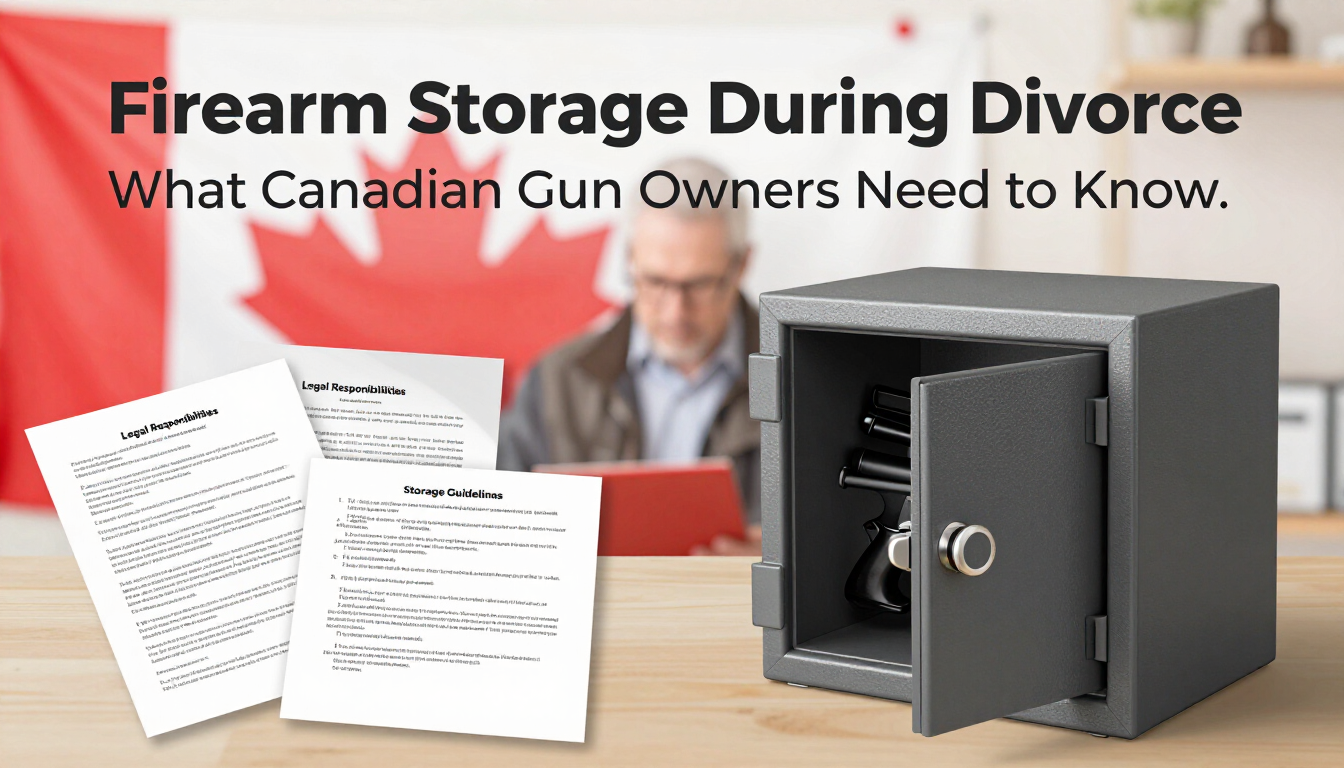
Does My Newly Prohibited Firearm Need an ATT or RAS for Storage?
If you own a firearm that was reclassified as prohibited under
Order in Council P.C. 2020-298 (May 1, 2020), you have probably been trying to figure out what your options are — and whether using a licensed storage facility requires you to fill out government paperwork first. The answer depends on what your firearm was classified as before the reclassification. If it was previously
non-restricted, you do not need an Authorization to Transport (ATT) or a Request for Alternate Storage (RAS) to deliver it to a licensed third-party storage facility — the Chief Firearms Office has confirmed this directly. If it was previously
restricted, an RAS is required before delivering it to a licensed storage facility. An ATT may be required in certain circumstances depending on how the firearm needs to be transported.
This post explains what that means for you, what the process actually looks like, and why acting during the current amnesty period matters.
What Order in Council P.C. 2020-298 Changed
Order in Council P.C. 2020-298 came into force and reclassified a large number of semi-automatic firearms — previously classified as non-restricted or restricted — as prohibited. This affects hundreds of models, including many common hunting rifles and sport-shooting platforms.
If your firearm was caught by this reclassification, you are now in a legal grey zone. You cannot sell it or transfer ownership to another individual. Your options are limited.
Most owners do not want to give up their firearms permanently, especially while legal challenges to Order in Council P.C. 2020-298 are still making their way through the courts.
The Paperwork Misconception Cleared Up
A lot of gun owners have heard that moving a firearm to a third party requires an ATT (Authorization to Transport) or that alternate storage arrangements need government sign-off through a RAS (Request for Alternate Storage). That confusion is understandable — those requirements do apply in certain situations.
Here is what the rules during the amnesty period say for
newly prohibited firearms placed with a
federally licensed storage facility, broken down by the firearm's prior classification:
Previously Non-Restricted: No ATT and No RAS Required
If your firearm was previously non-restricted before being reclassified as prohibited, the path to licensed storage is straightforward. The Chief Firearms Office has confirmed that owners of formerly non-restricted newly prohibited firearms do not need an ATT and do not need a RAS in order to deliver their firearm to a licensed storage facility.
This is a significant clarification. It means owners of formerly non-restricted firearms do not need to initiate contact with the CFO or wait for approvals in order to use a licensed storage facility. However, note that the licensed facility itself has its own record-keeping obligations upon receiving your firearm.
Previously Restricted: RAS Required, ATT May Be Required
If your firearm was previously restricted before being reclassified as prohibited, the process has additional steps. You will need to submit a Request for Alternate Storage (RAS) to the CFO and receive approval before delivering the firearm to a licensed storage facility. Depending on how the firearm needs to be transported, an ATT may also be required — note that ATT issuance for prohibited firearms is limited in scope, and the amnesty framework may provide some protection for certain transport activities. Steller recommends confirming with your CFO office exactly what transport authorization is needed in your specific circumstances. Steller can walk you through the RAS process so you know exactly what to submit and what to expect.
What Steller Has Been Told by the CFO
Steller Management has sought direct clarification from the Chief Firearms Office on this question — because our clients were asking, and the guidance available online was not clear enough.
The CFO confirmed:
owners of newly prohibited firearms that were previously non-restricted can deliver their firearms to a federally licensed storage facility without an ATT and without a RAS.
For this category, the owner is not required to file paperwork directly with the government to initiate the storage arrangement. (The facility retains its own record keeping obligations, which Steller handles on its end.)
For owners whose firearms were previously restricted, the CFO's position is that a RAS is required before delivering to licensed storage — an ATT may also be needed depending on the transport circumstances.
This confirmation is at the core of how Steller operates. We built our intake process around it so that gun owners in BC and Alberta can move forward with confidence and without unnecessary paperwork.
What the Process Actually Looks Like
Storing your newly prohibited firearm with Steller is straightforward:
1.
Contact Steller
— Call 604-305-4612, email info@stellermgmt.com, or visit
[stellermgmt.com](https://stellermgmt.com) to get started. We will walk you through the intake steps and confirm your firearm's prior classification.
2.
Arrange shipping or drop-off
— We provide guidance on how to package and ship the firearm legally. Shipping a prohibited firearm to a licensed facility is permitted under the current amnesty framework.
3.
Firearm is received and stored — Once received, your firearm is logged, stored securely, and insured. You receive documentation confirming storage.
4. Your options stay open — While your firearm is in storage, you retain ownership of it. Delivering a firearm to a licensed storage facility is not a transfer of ownership — you remain the registered owner. If the legal situation changes — whether through a court ruling or legislative amendment — your firearm is still intact, accounted for, and yours. That is not the case if you surrender it to the buyback.
Important legal note: Steller is licensed to store prohibited firearms, but alternate storage may not relieve you as the owner of being considered in legal possession. The interaction between licensed storage arrangements and possession provisions is a nuanced area. Please consult your lawyer regarding the legal implications of possession and property ownership in your specific situation.
Why Storage Beats Surrendering
The government buyback offers compensation, but it is permanent. Once you surrender your firearm, it is gone. Many gun owners believe it is worth waiting before making an irreversible decision.
Licensed storage lets you:
-
Preserve your firearm pending any legal or legislative changes
-
Minimize paperwork
— previously non-restricted owners need no ATT and no RAS; previously restricted owners need an RAS and should confirm ATT requirements with their CFO
-
Keep your options open
without violating the amnesty terms
The amnesty has been extended since Order in Council P.C. 2020-298 took effect. As of the time of writing, the amnesty period remains in place, but the deadline is subject to change. Steller recommends not waiting — acting while the amnesty is active ensures the clearest legal path to storage.
FAQ: Prohibited Firearm Storage in Canada
Do I need to notify the government before storing my prohibited firearm?
It depends on your firearm's prior classification. If it was previously
non-restricted, you as the owner are not required to file paperwork with the CFO — no ATT, no RAS. You can proceed directly to licensed storage. Note that the licensed facility itself has federal record-keeping obligations on receipt of your firearm, but those are the facility's responsibilities, not yours. If your firearm was previously
Restricted, you will need to submit a RAS (Request for Alternate Storage) to the CFO and receive approval before delivering to a licensed facility.
What is the difference between an ATT and a RAS?
An ATT (Authorization to Transport) is a transport authorization that permits the movement of a restricted or prohibited firearm to a specific location for a specific purpose. ATT issuance for prohibited firearms is limited in scope, and the amnesty framework may provide protection for certain transport activities — Steller recommends confirming the requirements with your CFO. A RAS (Request for Alternate Storage) is a CFO approval for an owner who needs to store a firearm at a location other than their registered address. For newly prohibited firearms that were previously non-restricted, neither an ATT nor a RAS is required when delivering the firearm to a licensed storage facility. For previously restricted firearms, the RAS is required; ATT requirements depend on the specific transport circumstances.
What happens to my firearm if the C-21 legal challenges succeed?
If a court strikes down or significantly limits Order in Council P.C. 2020-298 reclassification provisions, your firearm would be returned to its prior legal classification. Because it is in storage rather than surrendered, it still exists and can be retrieved — you have retained ownership. Owners who surrendered to the buyback will not get their firearms back.
Is Steller federally licensed to store prohibited firearms?
Yes. Steller Management holds the appropriate federal licenses to store prohibited firearms in Canada. Our BC facility is operational, and we are expanding to Alberta. We carry the insurance and maintain the security standards required for prohibited firearm storage.
What is the amnesty and what does it mean for me?
The amnesty under the Order in Council P.C. 2020-298 framework protects owners of newly prohibited firearms from prosecution while they make decisions about compliance. The amnesty has been extended to October 20,2026. During the amnesty, arranging licensed storage is one of the clearest paths to compliance. Once the amnesty expires, the rules governing non-compliant possession will tighten significantly.
Does storing my firearm with Steller transfer ownership?
No. Delivering your firearm to Steller for storage does not constitute a transfer of ownership. You remain the registered owner. Steller holds your firearm as a licensed custodian. That said, the intersection of storage arrangements and possession law is a nuanced area — consult a lawyer if you have specific questions about how this affects your legal position.
Ready to Store Your Firearm? Contact Steller Today.
If you own a newly prohibited firearm and want to preserve your options, Steller Firearms Management & Storage is ready to help.
-
Phone: 604-305-4612
- Email: info@stellermgmt.com
- Web:
[stellermgmt.com](https://stellermgmt.com)
Do not wait for the amnesty deadline to force a rushed decision. Call or email us now to confirm your firearm's prior classification, understand exactly what — if anything — is required before storage, and get started with the intake process. For most owners of previously non-restricted firearms, the paperwork burden you are worried about does not exist — the CFO has confirmed it. The only step left is reaching out.