How to Store Guns Safely in Canada: The Complete Guide to Legal Firearm Storage

June 22, 2026

Share this article

How to Store Guns Safely in Canada: The Complete Guide to Legal Firearm Storage

Whether you're a hunter, sport shooter, or a new licence holder who just picked up your first firearm, figuring out how to store your guns safely and legally is one of the most important responsibilities you'll face as a Canadian gun owner. Getting it wrong isn't just a safety risk; it can mean criminal charges under the Criminal Code of Canada. Getting it right protects your family, your community, and your licence.


This guide breaks down exactly what the law requires, what storage products actually work, and how to build a storage setup that keeps you compliant year-round.


Why Safe Gun Storage Matters More Than Ever in Canada

Canada's firearm laws have tightened significantly in recent years. Bill C-21, which received Royal Assent on December 15, 2023, brought sweeping changes to the regulatory landscape, from codifying the national handgun freeze into law to introducing new "red flag" provisions that allow courts to remove firearms from individuals deemed a safety risk. Compliance has never been more consequential.


Even before C-21, unsafe storage was a serious offence. Under section 86 of the Criminal Code of Canada, storing or handling a firearm recklessly or in a way that risks public safety is a hybrid offence, meaning the Crown can proceed summarily or by indictment depending on the severity of the circumstances. Penalties can include fines, a criminal record, and the loss of your Possession and Acquisition Licence (PAL).


The day-to-day rules for how to store your guns are spelled out in the Storage, Display, Transportation and Handling of Firearms by Individuals Regulations (SOR/98-209), enacted under the Firearms Act. Understanding these regulations is the foundation of safe, legal ownership.


The Three Firearm Classes and What Storage Each Requires

Canada classifies all firearms into three categories, and each has its own storage standard. Before you decide on a safe or cabinet, you need to know exactly what you own.


Non-Restricted Firearms (Rifles and Shotguns)

This is the broadest class and includes most hunting rifles and shotguns. Under section 5 of SOR/98-209, a non-restricted firearm must be stored:


  • Unloaded, and
  • Rendered inoperable by means of a secure locking device (trigger lock, cable lock, or equivalent), or locked inside a container, room, or receptacle that is securely locked and constructed so it cannot readily be broken into.


In plain terms, your hunting rifle needs to be unloaded and either trigger-locked or locked inside a gun cabinet or safe. Leaving it leaning against the wall in your basement, even unloaded, does not meet the legal standard.


Restricted Firearms (Handguns and Certain Semi-Automatics)

If you hold a Restricted PAL (RPAL) and own handguns or restricted-class semi-automatic firearms, the requirements are stricter. Under section 6 of SOR/98-209, restricted firearms must be:


  • Unloaded, and
  • Rendered inoperable by means of a secure locking device and stored in a securely locked container, receptacle, or room that cannot readily be broken into, or
  • Stored in a vault, safe, or room specifically constructed or modified for the secure storage of restricted firearms.


Note that "and"   restricted firearms require both a locking device on the firearm itself and a locked container. A trigger lock alone is not sufficient without a secure enclosure.


Prohibited Firearms

Very few civilians hold licences for prohibited firearms. The storage requirements under section 7 of SOR/98-209 mirror those for restricted firearms, with the same layered approach: rendered inoperable and stored in a securely locked, break-resistant container or vault.


The Best Ways to Store Guns: Products and Solutions

Now that you understand the legal floor, let's look at the actual products that meet and exceed those requirements. Canadians have solid options across every budget.


1. Gun Safes (Best Overall Option)

A quality gun safe is the gold standard for storing your guns in Canada. For restricted firearm owners, it's essentially required by law. For non-restricted owners, it's the most practical and secure option.


When shopping for a Canadian-compliant gun safe, look for:


Steel gauge: 12-gauge steel or heavier resists prying and cutting. Many budget safes use 14- or 16-gauge steel, which is more vulnerable. For restricted firearms, opt for at least a 12-gauge.


Locking mechanism: The law defines a "secure locking device" as one that can only be opened by an electronic, magnetic, or mechanical key, or by an alphabetical or numerical combination. Biometric safes, combination safes, and key-lock safes all qualify, but make sure the mechanism itself is robust. Cheap electronic locks can fail or be bypassed.


Fire rating: Not legally required, but worth considering. A UL-rated fire-resistant safe protects against both theft and fire damage.


Bolt-down capability: Most insurers and many security-conscious owners bolt safes to the floor or wall. This prevents the entire unit from being carried off.


Popular Canadian retailers like Cabela's Canada, Bass Pro Shops Canada, and Canadian Tire carry a range of gun safes. Stack-On, Winchester, and Liberty Safe are commonly available brands. Expect to spend $300–$600 on a reliable, non-restricted storage solution, and $600–$2,000+ on restricted-grade steel safes.


2. Locking Gun Cabinets

A steel gun cabinet with a key or combination lock meets the storage requirements for non-restricted firearms, provided it is solidly constructed. These are typically lighter and less expensive than safes, making them accessible for hunters with several long guns to store.


Keep in mind that a cabinet is generally not considered suitable for restricted firearm storage on its own. Cabinets are often thinner steel and lack the reinforced door construction of a true safe. If you own any restricted firearms, pair a cabinet (for long guns) with a quality pistol safe or full-size gun safe.


3. Trigger Locks and Cable Locks

Trigger locks and cable locks are inexpensive and meet the "secure locking device" definition under SOR/98-209. They're a practical option for non-restricted firearms, especially if you have a locked room or storage area where the firearms are kept.


However, they are not stand-alone solutions for restricted firearms. And practically speaking, a trigger-locked rifle stored in an unlocked closet is likely to fail a legal compliance review. Think of locks as one layer in a multi-layer approach.


4. Dedicated Vault Rooms

For serious collectors or owners with large inventories, a vault room, a room specifically constructed or modified for secure firearm storage, is explicitly recognized under section 6 of SOR/98-209 as compliant storage for restricted firearms. This involves reinforced walls, a heavy-duty door with a quality lock, and proper ventilation. It's an investment, but it's unambiguously legal and offers enormous capacity.


5. Ammunition Storage

The law doesn't specify that ammunition must be stored separately from firearms, but best practice and a common recommendation from the Canadian Firearms Program is to store ammunition in a separate locked container. This adds another layer of safety, especially in households with children. Metal ammo cans with padlocks are inexpensive and effective.


Common Storage Mistakes That Can Cost You Your PAL

Even well-intentioned gun owners sometimes fall into habits that put them offside the law. Here are the most common pitfalls:


Storing a loaded firearm. Any firearm in storage must be unloaded, no exceptions. Under SOR/98-209, "unloaded" means no propellant, projectile, or cartridge is in the breech, firing chamber, or attached magazine.


Relying on a single layer of security for restricted firearms. Section 6 requires both a locking device on the firearm and a locked container. A handgun in a trigger lock inside an unlocked safe is not compliant.


Leaving firearms accessible to unauthorized persons. The storage location must not be accessible to people without authorization. A gun cabinet in a shared garage or unlocked basement workshop is a red flag.


Expired PAL. If your PAL lapses, your legal authority to possess firearms lapses with it. Renewal should be treated like renewing your driver's licence; never let it expire.


Improper storage during cleaning. Courts have seen cases where owners took firearms out of safes to clean them, loaded them "to check for corrosion," and then failed to return them to compliant storage before police arrived. The law applies continuously; the moment a firearm is not being actively handled, it needs to be in compliant storage.


Storage When Travelling or at a Seasonal Property

If you're transporting firearms to a hunting camp, a second property, or a range, the transportation rules under SOR/98-209 apply alongside the storage rules. Non-restricted firearms must be unloaded and, if in an unattended vehicle, stored in a locked container or the trunk. Restricted firearms require an Authorization to Transport (ATT) to move them anywhere other than their registered location.


At a seasonal camp or cabin, the same storage standards apply as they do at home. A portable locking gun case with a quality padlock is a minimum solution for a hunting camp. Many serious hunters invest in a small portable safe that can be bolted to the floor or a wall stud, even in a remote cabin.


Building a Storage System That Works for Your Situation

There's no one-size-fits-all answer to how to store your guns; it depends on what you own, where you live, whether children are in the home, and your budget. But a practical framework looks like this:


For a hunter with two or three non-restricted long guns, a quality locking steel cabinet plus trigger locks for each firearm is a solid, legal, affordable setup. Add a separate locked ammo box, and you're set.


For an RPAL holder with handguns, a 12-gauge steel gun safe with a combination or electronic lock bolted to the floor is the right base. Handguns get trigger locks inside the safe for the layered security section 6 demands.


For a collector with a large inventory spanning multiple classes, a dedicated vault room or a combination of heavy-duty safes with a security alarm system is the professional approach. Consider consulting with a certified firearms officer if your situation is complex.


Final Word: Compliance Is Ongoing, Not One-Time

Knowing how to store your guns properly in Canada isn't a box you check once and forget. Laws evolve. Bill C-21 is a recent example, and your circumstances change. A new family member moves in, you acquire a different class of firearm, or you move to a new home. Each change is a reason to re-evaluate your storage setup.


Stay connected with the Canadian Firearms Program (CFP) at Public Safety Canada, and consult a lawyer familiar with Canadian firearms law if you're ever uncertain about your compliance. Your PAL  and your freedom depend on getting this right.


Safe storage isn't just a legal obligation. It's what responsible Canadian gun owners do.


This article is for informational purposes only and does not constitute legal advice. Firearm laws in Canada are subject to change. Always consult the current text of the Firearms Act, SOR/98-209, and the Criminal Code of Canada, or speak with a qualified legal professional, for authoritative guidance.


.

Recent Posts

June 22, 2026
Gun Storage Requirements by Province in Canada: A Complete 2026 Guide Keywords: Canadian gun storage laws, firearm storage requirements Canada, gun safe laws by province, PAL firearm storage, how to store guns legally in Canada, secure firearm storage Canada, non-restricted firearms storage, restricted firearm storage rules, Canadian Firearms Act storage, provincial gun laws Canada Safe and lawful firearm storage is one of the most fundamental obligations for any Canadian gun owner. Whether you own a hunting rifle in rural Saskatchewan or a restricted handgun in downtown Toronto, the law is clear: how you store your firearm matters legally, ethically, and practically. This guide walks through the federal baseline that applies coast to coast, the role of provincial Chief Firearms Officers (CFOs), and what owners in each region should know. Disclaimer: This article is for general informational purposes only and does not constitute legal advice. Laws change frequently. Always consult the official Government of Canada website, your provincial CFO, or a qualified legal professional for advice specific to your situation. The Federal Foundation: What the Law Requires Everywhere in Canada Canada's firearm storage rules are primarily federal in scope. The core legal authority comes from two sources: The Firearms Act, S.C. 1995, c. 39 , governs licensing, registration, transportation, and storage of all civilian firearms. The Storage, Display, Transportation and Handling of Firearms by Individuals Regulations, SOR/98-209 the detailed, operational rulebook that spells out exactly how firearms must be stored. These federal rules apply equally in every province and territory. Provincial laws may add requirements on top of the federal floor, but they cannot reduce them. Non-Restricted Firearms (Most Rifles and Shotguns) Under SOR/98-209, a non-restricted firearm think common hunting rifles and shotguns, must be stored so that it is: Unloaded , and Secured by at least one of the following methods: A trigger lock or cable lock The bolt or firing mechanism was removed Stored in a securely locked container, receptacle, or room that cannot be readily broken into Ammunition must also be kept inaccessible to the firearm unless it is stored in a separate locked container of its own. If ammunition and the firearm are stored together, both must be in the same locked, tamper-resistant container. Remote wilderness exception: The regulations carve out a limited exception for individuals in remote wilderness areas where there are no visible signs of habitation. Storage requirements for non-restricted firearms are relaxed in these circumstances (SOR/98-209, s. 5(3)). Predator control exception: A non-restricted firearm may be stored temporarily without a trigger lock or locked container if the owner reasonably requires it for the control of predators or other animals, provided discharge of the firearm is lawful in that location (SOR/98-209, s. 5(2)). Restricted Firearms (Handguns and Certain Rifles) Restricted firearms face significantly stricter storage standards under SOR/98-209. They must be stored: Unloaded , With a locking device applied (trigger lock, cable lock, or equivalent), and In a securely locked container that is constructed so it cannot readily be broken into, both requirements must be met simultaneously, not just one or the other. Ammunition storage rules remain the same: keep it locked and inaccessible unless co-located in the same locked container. Prohibited Firearms Prohibited handguns follow the same storage rules as restricted firearms. Other prohibited firearms (such as those listed under OIC C-21 prohibitions in effect since 2020 and expanded through 2024) are subject to the amnesty period running until October 30, 2026 , which protects previously lawful owners from criminal liability for possession but does not suspend safe storage obligations. The Role of Chief Firearms Officers (CFOs) Each province administers the Firearms Act through a provincially or federally designated Chief Firearms Officer . CFOs issue licences, authorizations to transport (ATTs), and authorizations to carry (ATCs), and are responsible for enforcement within their jurisdiction. As of 2024, seven provinces have provincially designated CFOs : Alberta, New Brunswick, Nova Scotia, Ontario, Prince Edward Island, Quebec, and Saskatchewan. British Columbia, Manitoba, Newfoundland and Labrador, and the three territories operate under federally designated CFOs. This matters for storage because CFOs can impose additional conditions on licences and authorizations, which means storage expectations may be communicated differently from province to province, even when the underlying law is the same. Province-by-Province Breakdown Ontario Ontario applies federal storage regulations without additional provincial storage-specific legislation. The Fish and Wildlife Conservation Act, 1997, adds rules governing the types of firearms permitted for hunting and hours of use, but these do not alter home storage requirements. Ontario has a provincially designated CFO and is known for active licence and eligibility monitoring under the Firearms Act . Key reference: No additional Ontario-specific storage statute beyond SOR/98-209 and the Firearms Act . Quebec Quebec is unique among Canadian provinces for having established a provincial firearms registry in 2018 for non-restricted long guns, the Act Respecting Firearms (Loi sur les armes à feu, RLRQ c A-17.1). Non-restricted firearms do not require registration federally, but Quebec owners must register their long guns with the provincial registry (Registre québécois des armes à feu). Storage requirements themselves follow the federal framework under SOR/98-209, but Quebec's enhanced regulatory environment means owners face additional administrative compliance layers. Quebec has a provincially designated CFO. Key reference: Loi sur les armes à feu (Québec); SOR/98-209 (federal storage rules). British Columbia British Columbia follows federal storage regulations under SOR/98-209 without additional provincial storage legislation. However, individual municipalities, particularly in the Lower Mainland, may have bylaws that affect where and how firearms are stored or transported on specific properties. BC operates under a federally designated CFO. Hunters should also be aware of BC's Wildlife Act , R.S.B.C. 1996, c. 488, which governs the use of firearms for hunting and may interact with field-storage practices. Alberta Alberta has taken a distinctive political stance on federal firearms regulation, passing the Alberta Firearms Act in 2023, which asserts provincial authority to regulate firearms and restricts municipalities and police from entering firearms agreements with the federal government without provincial approval. However, this legislation does not alter the storage requirements themselves; home storage of non-restricted and restricted firearms in Alberta still follows SOR/98-209. Alberta has a provincially designated CFO and a strong firearms culture that generally aligns with federal minimums. Key reference: Alberta Firearms Act (2023) for provincial policy context; SOR/98-209 for storage rules. Saskatchewan and Manitoba Both Prairie provinces follow federal storage regulations without additional provincial storage requirements. Saskatchewan has a provincially designated CFO; Manitoba's CFO is federally designated. Firearms are widely used for hunting and pest control across both provinces, and the rural predator-control exemption under SOR/98-209 s. 5(2) is practically relevant for many owners. Atlantic Provinces (New Brunswick, Nova Scotia, PEI, Newfoundland and Labrador) All four Atlantic provinces apply federal storage requirements under SOR/98-209 without province-specific storage statutes. New Brunswick, Nova Scotia, and PEI each have provincially designated CFOs; Newfoundland and Labrador operates under a federally designated CFO. Hunters should review each province's wildlife legislation, such as New Brunswick's Fish and Wildlife Act , S.N.B. 1980, c. F-14.1 for any firearm-use rules that indirectly affect storage during hunting trips. Northern Territories (Yukon, Northwest Territories, Nunavut) All three territories operate under federally designated CFOs. Federal storage laws apply in full. The remote wilderness exemption in SOR/98-209 s. 5(3) is especially relevant in the North, where many communities are genuinely remote, and predator encounters with firearms are part of daily life. Owners should nevertheless confirm with their territorial CFO what documentation or registration may apply. Ammunition Storage: A Note The Firearms Act and SOR/98-209 are less prescriptive about ammunition than about the firearms themselves. Section 6 of SOR/98-209 requires that ammunition be stored securely and not readily accessible to an unsecured firearm. The RCMP Canadian Firearms Program recommends storing ammunition in a locked container, separate from the firearm, in a cool, dry location , while noting these are best practices rather than absolute legal mandates beyond the accessibility rule. No province currently imposes additional ammunition-specific storage requirements beyond the federal framework. Best Practices Every Canadian Gun Owner Should Follow Regardless of province, responsible gun owners go beyond the legal minimum: Use a quality gun safe. A rated gun safe exceeds the "locked container" standard and provides genuine security against theft and unauthorized access. Look for safes tested to RSC (Residential Security Container) standards. Store firearms and ammunition separately. Even where the law permits co-storage in a locked container, keeping them apart adds a layer of safety. Lock the safe to a wall or floor. A portable locked container can be carried away. A bolted safe cannot. Keep your PAL and documentation current. An expired Possession and Acquisition Licence (PAL) turns a legal firearm into an unlawful possession charge regardless of how well it's stored. Inform your household. Everyone in your home should know the storage rules, especially if children are present. The Canadian Firearms Safety Course (CFSC) and Canadian Restricted Firearms Safety Course (CRFSC) teach the fundamentals. Check with your provincial CFO for updates. Laws and OIC classifications change. The RCMP Firearms Reference Table is updated regularly. Penalties for Non-Compliance Failing to store a firearm in accordance with SOR/98-209 is a criminal offence under the Firearms Act . Penalties under the Act include: Summary conviction for less serious offences Indictable offences carrying up to two years' imprisonment for unsafe storage Improper storage that contributes to theft, injury, or death can also lead to additional Criminal Code charges. The consequences extend far beyond a fine — a conviction can result in a firearms prohibition order, stripping an owner of their right to possess firearms for years or for life. Key Legal References Instrument Purpose Firearms Act , S.C. 1995, c. 39 Master statute governing licensing, registration, and storage SOR/98-209 Detailed individual storage and transport rules SOR/98-210 Storage and transport rules for businesses Criminal Code , R.S.C. 1985, c. C-46, Part III Firearm classifications and criminal offences Bill C-21 (Royal Assent Dec. 15, 2023) Handgun freeze, red flag/yellow flag laws, expanded prohibitions Quebec Loi sur les armes à feu (RLRQ c A-17.1) Provincial long-gun registry in Quebec Alberta Firearms Act (2023) Provincial assertion of firearms regulatory authority RCMP Canadian Firearms Program Licensing, registration, and guidance resources Final Thoughts Canadian firearm storage law is primarily federal, which means the core rules, including those for unloaded, secured, and ammunition inaccessible, apply from Victoria to St. John's. Where provinces differ is in their administrative structures, additional registries (as in Quebec), and the political posture of their designated CFO offices. What never changes is the owner's individual obligation to store their firearms safely, lawfully, and responsibly. If you're unsure whether your current setup complies, the best resource is your provincial or territorial Chief Firearms Officer or the Canadian Firearms Program Contact Centre at 1-800-731-4000 . A five-minute phone call is worth far more than the cost of getting it wrong. LSI & Semantic Keywords: PAL (Possession and Acquisition Licence), RPAL (Restricted PAL), CFO (Chief Firearms Officer), CFSC (Canadian Firearms Safety Course), trigger lock, cable lock, gun safe Canada, locked container firearms, firearm prohibition order, Authorization to Transport, ATT, ATQ, Bill C-21 Canada, OIC firearms prohibition, RCMP Firearms Reference Table, non-restricted rifle storage, restricted handgun storage, firearm theft prevention, safe gun storage children, rural firearm exemption Canada, Quebec gun registry, Alberta Firearms Act 2023 .
June 22, 2026
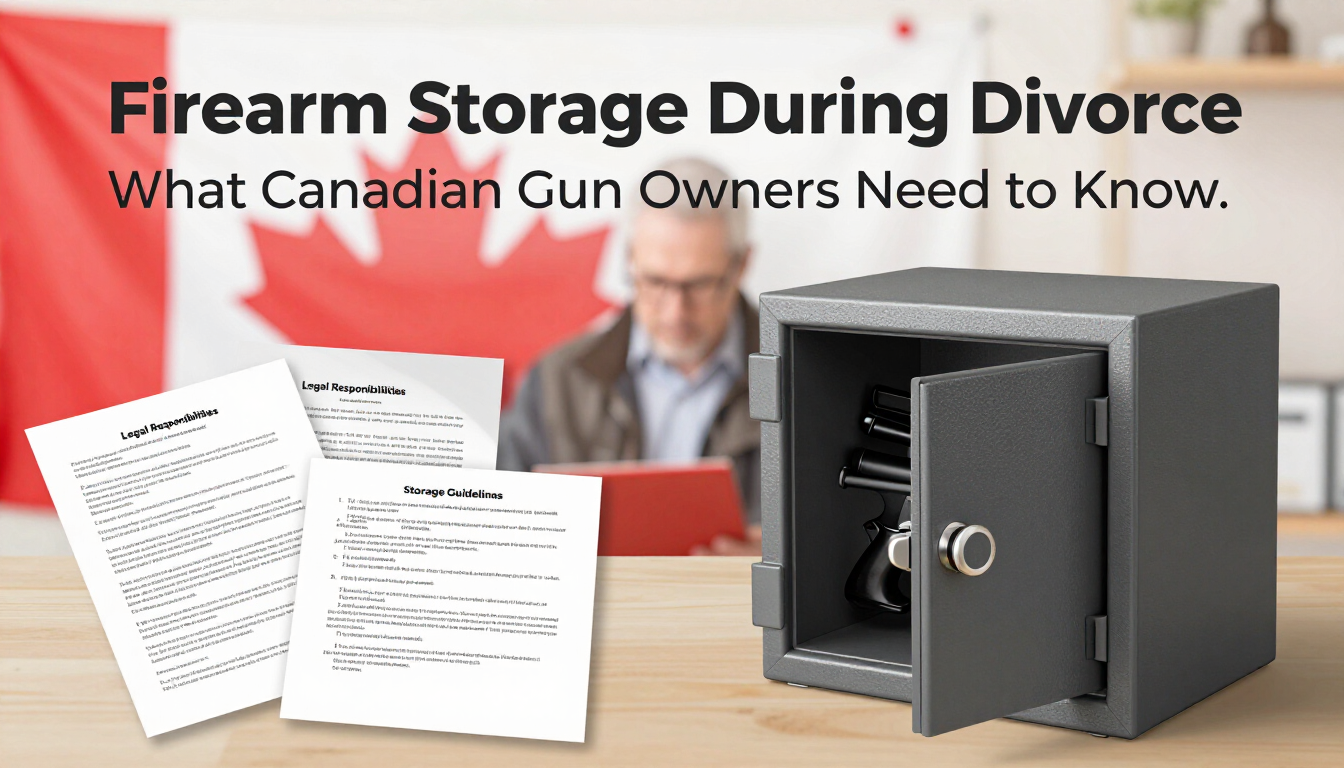
Firearm Storage During Divorce: What Canadian Gun Owners Need to Know Divorce is rarely simple. Between legal proceedings, changing living arrangements, financial negotiations, and emotional stress, firearm storage is often one of the last things people think about until it becomes a problem. For Canadian firearm owners, however, ensuring firearms remain legally stored and securely controlled during a separation or divorce is essential. Whether you're moving out, sharing a home temporarily, or navigating court orders, having a plan for your firearms can help prevent legal complications and provide peace of mind. Why Divorce Creates Unique Firearm Storage Challenges Unlike many household possessions, firearms are subject to strict federal regulations regarding possession, transportation, and storage. During a divorce, situations commonly arise where: One spouse moves out of the family home The home's ownership is disputed Firearms become part of property negotiations Temporary living arrangements do not allow secure storage Family members or visitors have increased access to the home Court orders create uncertainty about possession or access Even when both parties are acting reasonably, these circumstances can make it difficult to maintain proper firearm security and compliance. The Temporary Housing Problem One of the most common issues during separation is temporary housing. You may be staying with family, renting short-term accommodations, or living in a property that has not yet been equipped with compliant firearm storage. While these arrangements may work for day-to-day living, they are not always suitable for storing firearms safely and legally. Rather than rushing to install safes or create temporary storage solutions, many firearm owners choose professional licensed storage until their living situation stabilizes. Why Professional Firearm Storage Makes Sense During Divorce Professional storage provides a neutral, secure solution during a period when many other aspects of life are changing. Security Firearms remain stored in a professionally managed environment designed to meet federal storage requirements. This eliminates concerns about unauthorized access, theft, or improper storage during a transition period. Legal Compliance Canadian firearm owners remain responsible for ensuring firearms are stored in accordance with applicable regulations, regardless of personal circumstances. Licensed storage facilities are designed to meet these requirements and can help reduce uncertainty during a divorce. Reduced Stress Divorce often involves dozens of important decisions. Secure off-site storage allows firearm owners to focus on legal, financial, and family matters without worrying about the status of their firearms. Time to Make Long-Term Decisions Not every decision needs to be made immediately. Professional storage gives owners the flexibility to determine future plans once housing arrangements and legal matters have been resolved. Common Situations Where Storage Is Helpful Professional firearm storage is frequently used when: One spouse is relocating temporarily A home is being sold as part of the divorce settlement Renovations or moves are occurring simultaneously Safe storage at the new residence is not yet available Firearms are part of an estate or family property discussion Owners simply want a secure, neutral solution during proceedings A Responsible Approach During a Difficult Time Divorce can create uncertainty, but firearm storage does not have to be one of the challenges you face alone. A licensed storage provider can ensure your firearms remain secure, compliant, and professionally managed while you focus on the more important aspects of rebuilding and moving forward. Need Temporary Firearm Storage? Whether you're navigating a separation, divorce, relocation, or another major life transition, professional firearm storage provides a secure solution when you need it most. Contact Steller Management to discuss your circumstances and determine the best storage option for your firearms.
By Derek Tisdelle June 5, 2026
Federally licensed firearm storage for Canadian institutions—CAF, police, museums, auction houses. Build-to-spec capacity, RAS/ATT handled.
April 7, 2026
Learn if newly prohibited assault style firearms require an ATT or alternate storage request. Get clear guidance on rules, compliance, and next steps today.
April 1, 2026
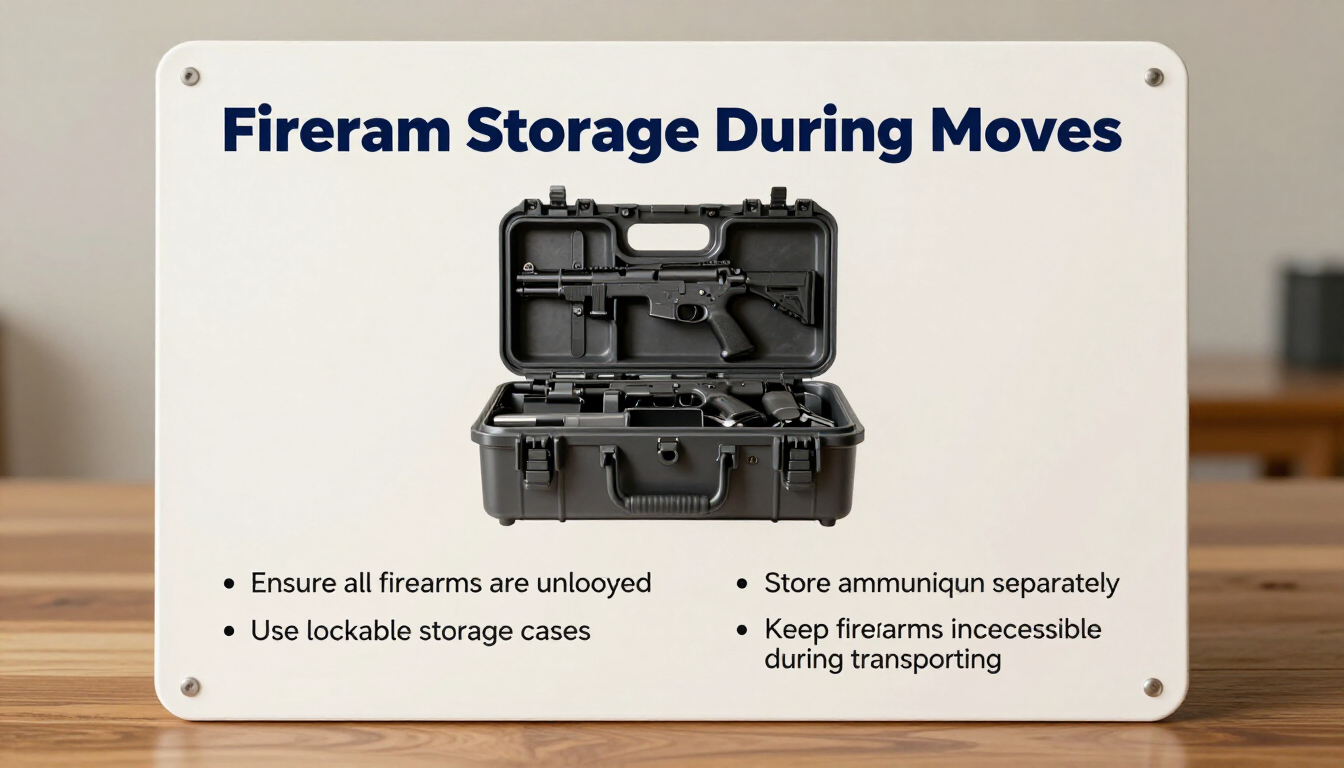
Moving with firearms in Canada requires strict legal compliance. Learn storage rules, transport laws, and why licensed facilities are the safest solution.
Canadian flag waving in front of a mountain valley with a blue sky.
January 26, 2026
Discover Steller’s perspective on the firearms buyback program, legal considerations, and safe storage options. Protect your firearms and stay informed today.